
Seoul Destination Guide: Royal Palaces, K-Culture & Street Food
Explore Seoul through its royal palaces, historic neighborhoods, modern cafés, K-culture, and vibrant food markets. Wear traditional hanbok, visit Gyeongbokgung Palace, stroll through Bukchon Hanok Village, and taste local dishes at Gwangjang Market while finding activities, hotels, and itinerary ideas tailored to your interests, budget, and pace.
Book Ticket to Seoul


Korean Royal Heritage
Discover Seoul’s royal history on a Korean Royal Heritage guided tour. Compare itineraries that may include Gyeongbokgung, Changdeokgung, and Deoksugung, each offering a different perspective on the Joseon dynasty and the Korean Empire.
Visit Gyeongbokgung Palace, established in 1395 as the primary palace of the Joseon dynasty by King Taejo, formerly Yi Seong-gye. The name Gyeongbokgung is commonly translated as “Palace Greatly Blessed by Heaven.” Explore its grand gates, ceremonial halls, courtyards, and pavilions while learning about read more


Hanok Village
Explore Seoul’s traditional architecture and neighbourhoods on a Hanok village guided tour. Depending on your itinerary, visit Bukchon, Namsangol, and Ikseon-dong to see how historic Korean homes, local life, and contemporary cafés come together in the city.
Traditional hanok often combine ondol, an underfloor heating system, with maru, a wooden floor that supports airflow in warmer weather. Designs vary by home and region, offering a distinctive look at Korean architecture and everyday life...read more


Gwangjang Market
Explore one of Seoul’s best-known food markets on a Gwangjang Market guided tour. Founded in 1905 as Korea’s first permanent market, Gwangjang is known for its lively food street as well as shops selling textiles, hanbok, groceries, and traditional goods.
Browse the market’s food stalls and discover familiar Korean favourites. Depending on the route and stall availability, you may try bindaetteok, a savoury mung bean pancake; mayak gimbap, bite-sized seaweed rice rolls; tteokbokki, spicy rice cakes; or kalguksu, knife-cut noodle soup. read more
Hotels and Key Attractions
When planning your Seoul holiday, selecting the right neighborhood base entirely defines your experience, balancing dynamic market shopping with quiet palace walks. If immersing yourself in Joseon Dynasty history is your top priority, the Sunbee Hotel is a strategic gem, sitting just 940 meters from both the majestic Gyeongbokgung Palace and the stunning gardens of Changdeokgung Palace, while the cozy Slow Stay DA keeps you a brief 720-meter stroll from Changdeokgung. For travelers looking to step into traditional Korean life, G3 Hotel Chungmuro and Dears Myeongdong are unbeatable launchpads, positioned a mere 300 meters from the cultural oasis of Namsangol Hanok Village. If a high-energy atmosphere packed with legendary street food tops your itinerary, Hotel Venue G and The May Hotel place you just 690 and 860 meters, respectively, from the bustling stalls of Gwangjang Traditional Market. Meanwhile, the centrally located Metro Hotel pulls double duty, sitting just 760 meters from the massive Namdaemun Market and 770 meters from Deoksugung Palace. Best of all, if you want to venture south to the world-class collections at the National Museum of Korea, central hubs like the LOTTE City Hotel Myeongdong and the Metro Hotel keep you just a quick, direct 4-kilometer transit hop away.
Super Rated 5 Star Accommodations in Seoul
The prices of hotels in Seoul can vary significantly due to three primary factors: location, season, and hotel category. Generally, accommodations in Gangnam, recognized as a center for business and contemporary luxury, tend to be pricier compared to those in Myeongdong and Insadong, which are well-known for shopping and cultural experiences. Hotel rates reach their highest during the cherry blossom season in spring and the busy summer holiday period, while the colder months, particularly January, February, and March, present the most affordable average rates. Excellent three-star hotels usually begin at approximately $63 to $401+ per night. Excellent four-star hotels typically fall within the range of $72 to $413+ per night. For those in search of a lavish stay, Seoul boasts an impressive array of five-star hotels, with average nightly rates varying from $104 to $869+ per night. Overall, excellent three-star hotels begin at approximately $63, while excellent five-star hotels may surpass $800 per night. Check out the following hotels.
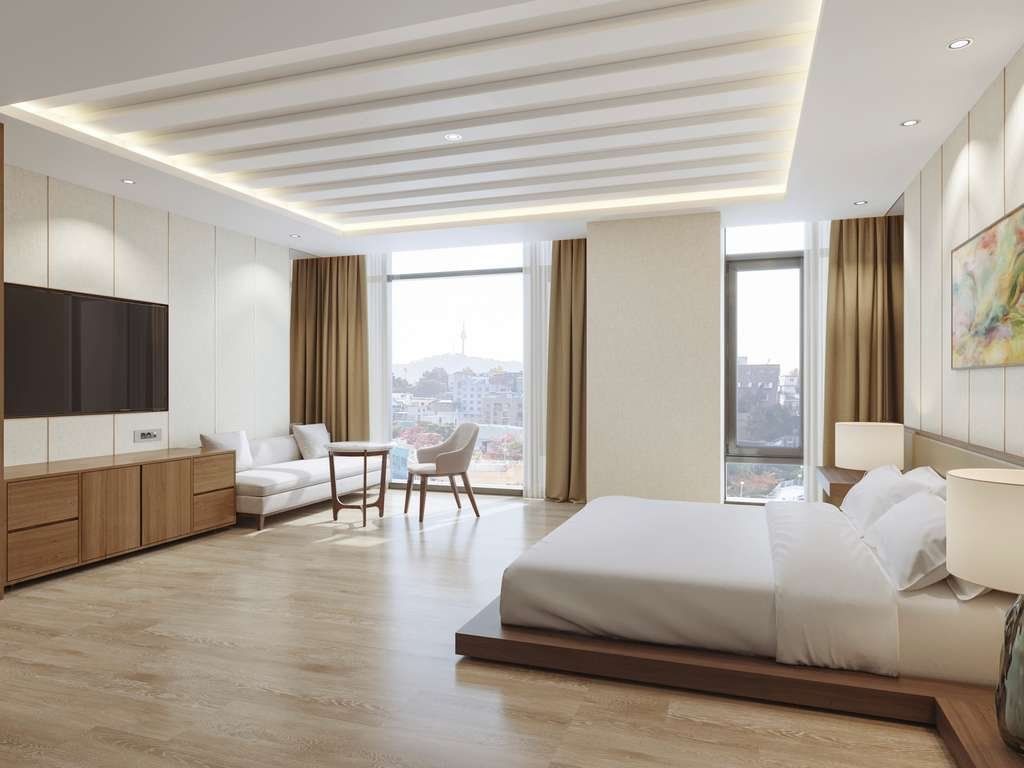
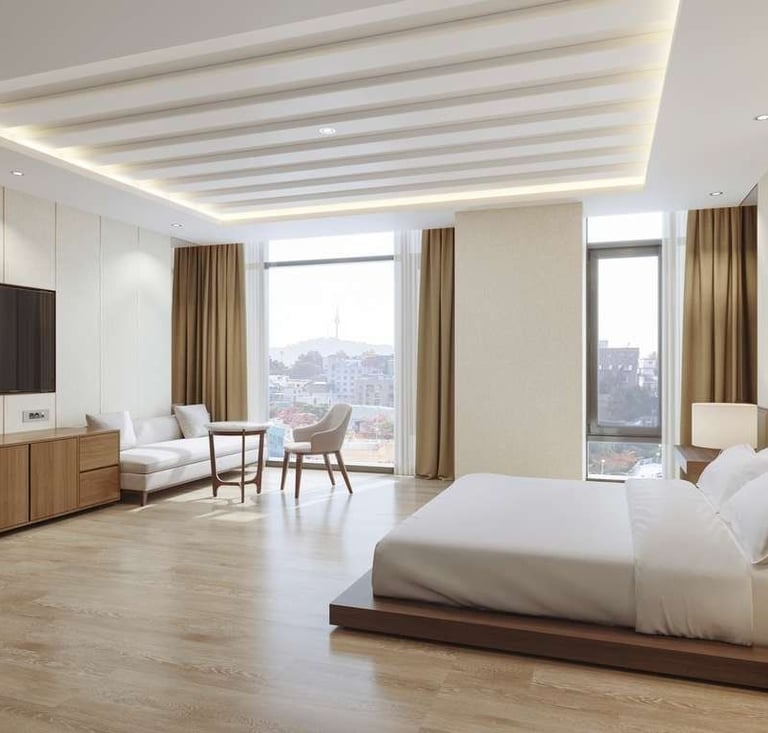
The Ambassador Seoul
Situated in the center of Seoul, The Ambassador Seoul - A Pullman Hotel stands as Korea's inaugural privately owned hotel, maintaining its rich historical legacy since 1955. It has been recently renovated, encompassing the exterior, guest rooms, restaurants, and bars, offering a total of 264 rooms and 40 residences. The hotel boasts 6 gourmet dining options too. This highly-rated 5-star hotel is 699 meters from the city center. Places nearby within 2 km are Namsangol Hanok Village, Dongdaemun Market, Gwangjang Traditional Market, N Seoul Tower, Namsan Park, and Namdaemun Market. Select dates of stay.
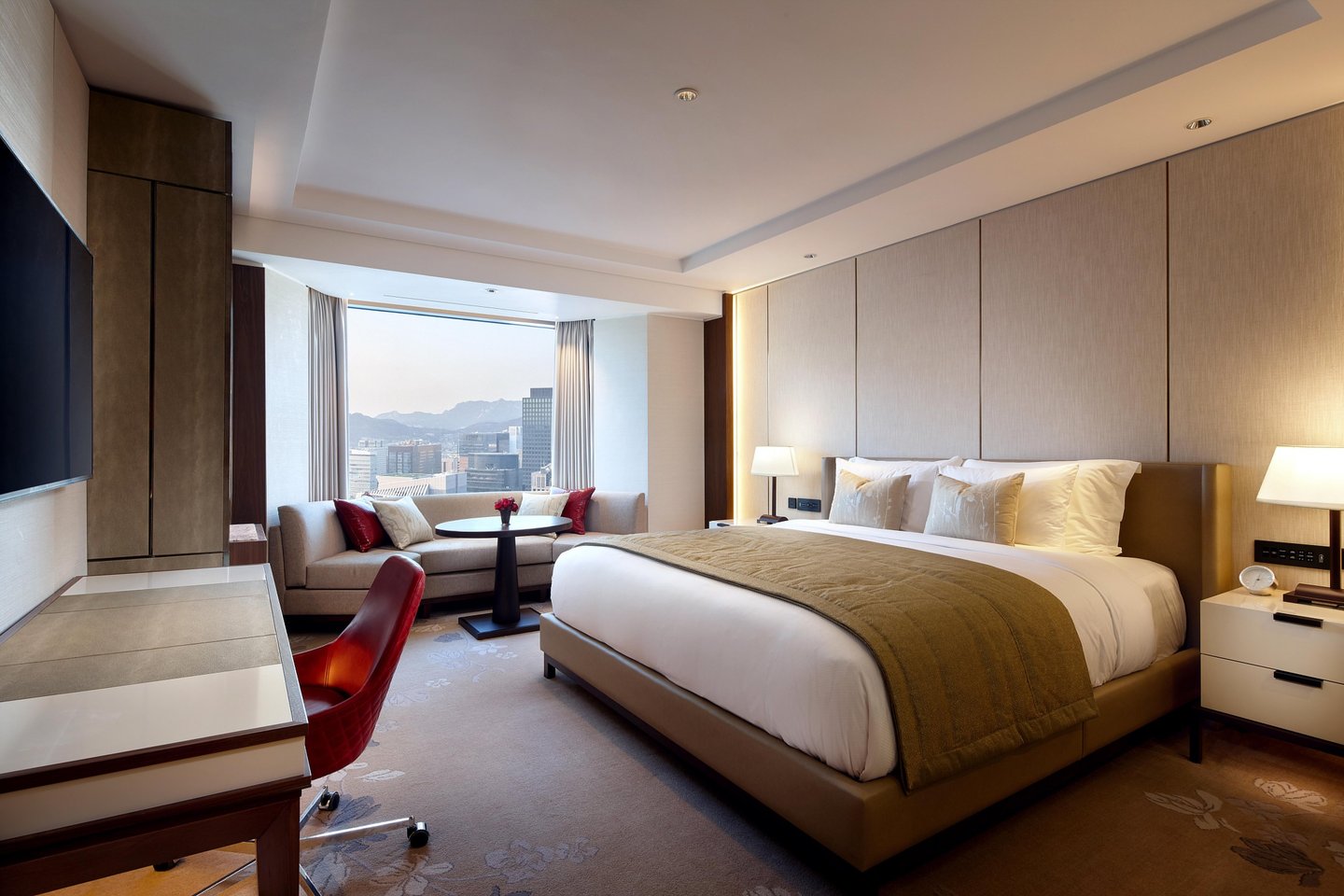
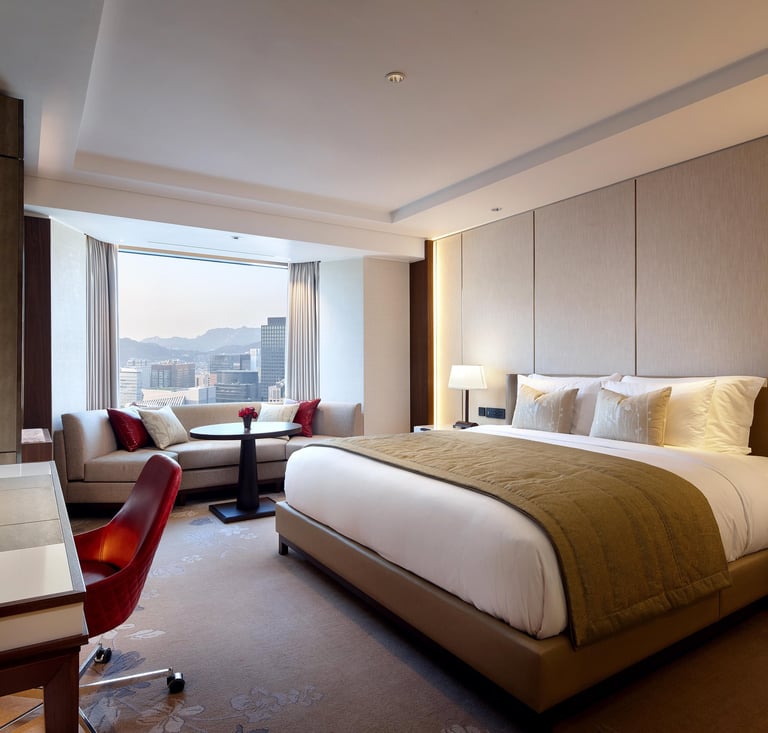
Lotte Hotel Executive Tower
Conveniently located near the lively Myeongdong shopping area, the Lotte Hotel Seoul Executive Tower positions guests just steps away from a variety of shopping and entertainment choices for discovering the vibrant city. This super rated 5-star hotel is located 282 meters from the city center. Places nearby within 2 km are Deoksugung Palace, Namdaemun Market, Gwanghwamun, Namsangol Hanok Village, Gyeongbok Palace, N Seoul Tower, and Gwangjang Traditional Market. Select dates of stay.
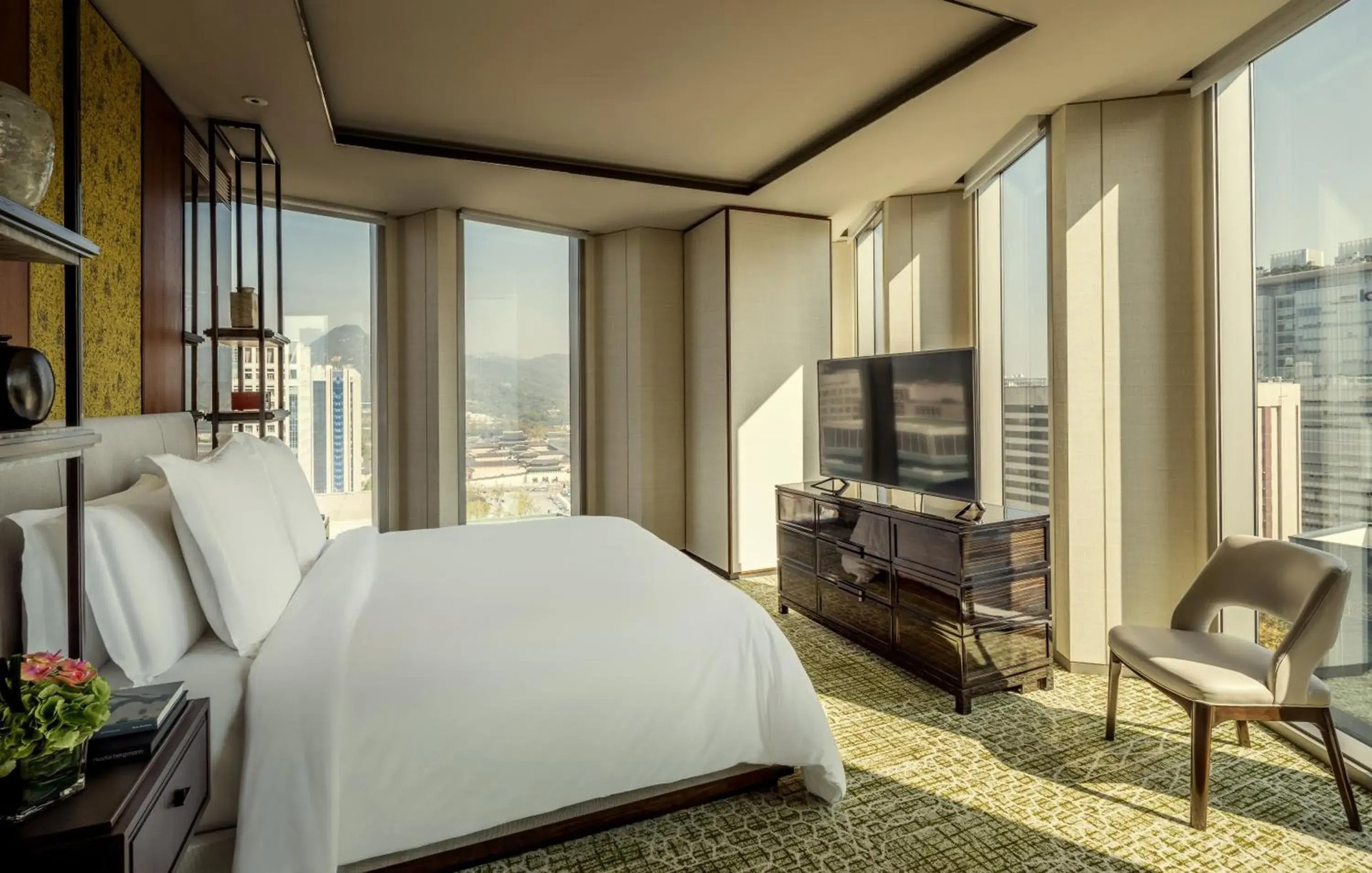
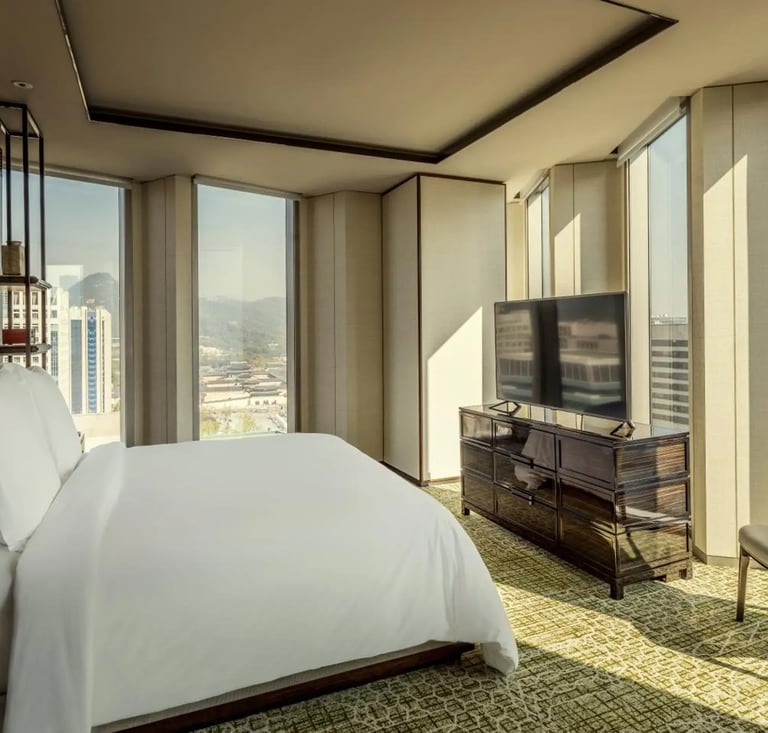
Four Seasons Hotel Seoul
In the vibrant Gwanghwamun district, Four Seasons Hotel Seoul is a 15-minute bus ride from the Myeong-dong shopping district. This contemporary luxury Hotel brings you to experience South Korea for the first time by inviting you to indulge in complete serenity at urban Spa or savoring Cantonese cuisine at Yu Yuan. This super rated 5-star hotel is located 515 meters away from the city center. Places nearby within 2 km are Deoksugung Palace, Gwanghwamun, Gyeongbok Palace, Namdaemun Market, and Changdeok Palace. Select dates of stay.
Getting Around
Seoul has an efficient and affordable public transportation system that is easy for visitors to use. City buses are identified by color: blue buses provide trunk routes between major districts and city centers, green buses connect residential neighborhoods with subway stations and main bus routes, yellow buses operate on circulation routes in central areas, and red buses provide rapid services between Seoul and the wider metropolitan region. Bus frequency varies by route, time of day, and traffic conditions, so travelers should not rely on a fixed 10- to 15-minute interval. Many stops have electronic displays showing estimated arrival times, and live information is also available through local navigation apps. Seoul Metropolitan Government - Bus
The Seoul subway is one of the most convenient ways to cross the city, with an extensive network, clear station numbering, and signs and announcements commonly available in English. A rechargeable T-money card is useful for frequent journeys and can be used on both buses and the subway. Visitors who do not have a transportation card can purchase single-journey tickets from subway stations, where multilingual ticket machines are available. Travelers should remember to tap their card or ticket when entering and exiting, and check the route carefully because the metropolitan rail network extends beyond Seoul into surrounding areas. Seoul Metropolitan Government - Transportation
Taxis are another practical option, especially for late-night trips, short journeys, or destinations that are not close to a subway station. They can be found at official taxi stands, hailed on the street, or booked through local ride-hailing apps. Although fares are generally reasonable compared with many major international cities, the final cost depends on distance, traffic, vehicle type, and possible late-night surcharges. For a smoother experience, use an official metered taxi or a reputable app, and keep your destination written in Korean or saved on a map in case communication becomes difficult.
Complete Our Short Travel Plan Form
Tell us what you want from your trip, and we will use this information to develop a comprehensive trip plan that includes a timeline, projected expenses, and various activity choices.


DESTINATIONS
© 2026 BezzieTravel. All rights reserved.
BezzieTravel is registered as a legal entity with the Ministry of Law and Human Rights of the Republic of Indonesia.